Vertical Autoclave About
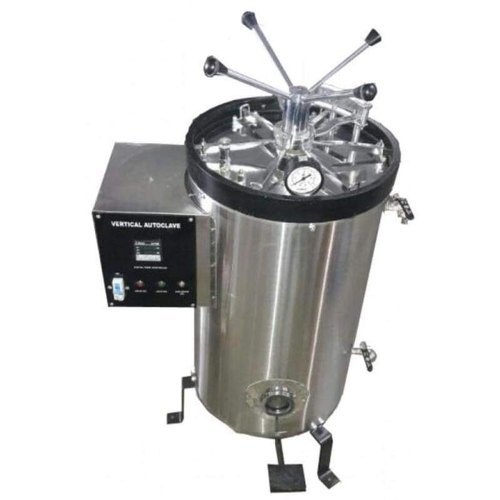
A SS (Stainless Steel) Vertical Autoclave is a top-loading, cylindrical steam sterilizer used extensively in medical, pharmaceutical, and microbiology laboratories. It utilizes high-pressure saturated steam to safely eliminate bacteria, viruses, and fungi from lab equipment, surgical instruments, and biological cultures.
Advanced Safety and ControlFeaturing multiple safety layers-including a pressure release valve, automatic pressure cut-off, and a safety fuse-this autoclave prioritizes operator and equipment protection. The radial locking mechanism with a swing arm guarantees a secure chamber seal, while precise temperature and pressure controls optimize sterilization without risk. Its digital or analog timer system supports up to 60 minutes, granting flexibility and user-friendly operation for different procedures.
Superior Build and UsabilityConstructed from high-quality SS304/316 with an option for mild steel powder coating, the vertical autoclave is both durable and easy to maintain. The chamber's mirror-polished finish resists corrosion, while glass wool insulation minimizes heat loss for energy efficiency. The stainless steel basket, external water level indicator, and bourdon-type analog pressure gauge make monitoring and maintenance straightforward for all users.
Versatile Application RangeDesigned for hospitals, laboratories, and research institutions, this autoclave efficiently sterilizes medical, laboratory, microbiological, and research instruments. Its vertical, cylindrical shape and multiple capacity options ensure that small and large batches are treated uniformly. The device operates on standard 220-240V power and is suitable for various professional environments needing effective sterilization solutions.
FAQ's of Vertical Autoclave:
Q: How does the radial locking swing-arm door enhance the autoclave's safety?
A: The radial locking swing-arm door provides a secure, even seal around the chamber, reducing the risk of accidental openings or steam leaks during operation. This mechanism, combined with safety valves and a fuse, ensures the autoclave operates safely at high pressures.
Q: What is the sterilization process used by this autoclave?
A: The autoclave employs gravity displacement, where steam replaces air by gravity, ensuring thorough penetration of steam into all parts of the load. This method is effective for sterilizing a variety of laboratory and medical instruments.
Q: When should routine maintenance and checks be performed on this autoclave?
A: It is recommended to perform routine maintenance checks, such as inspecting gaskets, cleaning the chamber, and verifying the functioning of safety and pressure release valves, at least once a month or according to your institution's safety protocols.
Q: Where can this autoclave be installed and used?
A: This floor-standing autoclave is suitable for installation in hospitals, laboratories, research institutes, and pharmaceutical facilities. Its robust design and different capacity options allow it to adapt to various clinical and research settings.
Q: What materials are used in the construction of the autoclave's critical components?
A: The chamber and basket are made from corrosion-resistant stainless steel (SS304/316 grade), and the outer body can be either mild steel powder-coated or stainless steel, as required. The gasket is made of silicone or synthetic rubber for durability and efficiency.
Q: How does the water level indicator benefit daily operation?
A: The external water level indicator allows users to easily monitor water levels before and during operation, helping prevent dry heating. This feature reduces the risk of element burnouts and ensures consistent steam generation for effective sterilization.




 Send Inquiry

 Send Inquiry